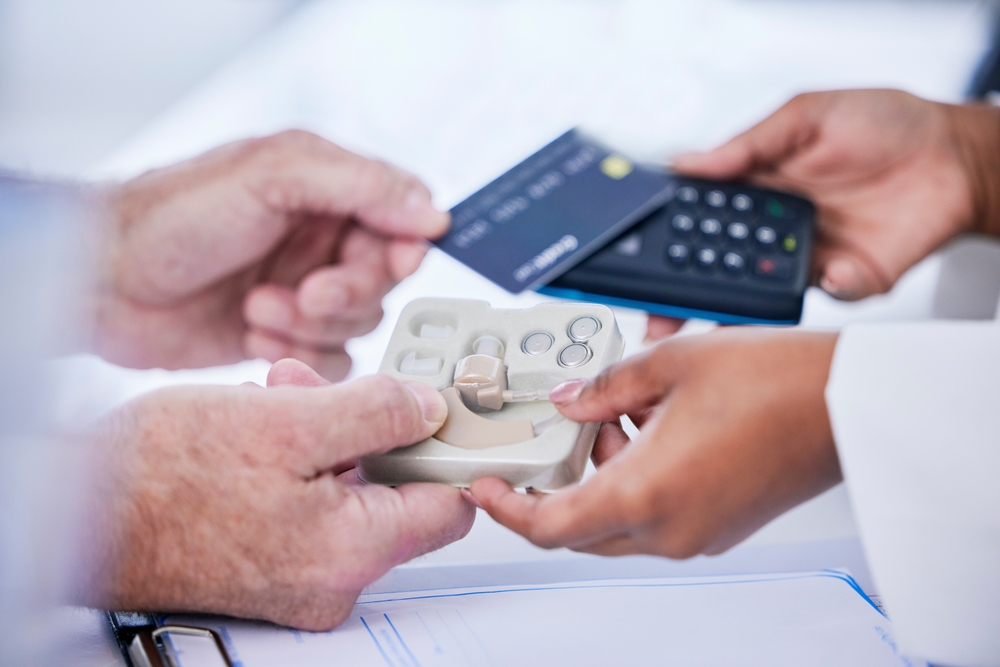
Patients researching therapeutic sound amplification often find that the initial acquisition expense stands out immediately. Based on the sophistication of the digital signal processing and the required audiometric programming, these devices span a wide pricing spectrum. For many patients, this sudden realization can cause hesitation and create an artificial barrier to necessary intervention.
The cost is real, but it’s not the whole story. Many don’t realize that the sticker price is rarely what you actually end up paying. Between insurance, pre-tax accounts, and financing options, there are multiple ways to reduce or spread out the cost.
This guide walks you through the most common options so you can understand what’s available before you go into an appointment and, hopefully, feel more confident about the investment in your hearing health.
Evaluating Third-Party Payer Coverage for Auditory Rehabilitation
Initial financial due diligence should always begin with an evaluation of your current insurance portfolio.
Under private healthcare frameworks, the scope of coverage for speech-preservation technology is subject to extreme variation. Some plans cover a portion, while others offer a fixed allowance. In contrast, certain insurance products offer zero provision for auditory assistive devices. To verify your specific criteria, contact your insurer’s benefit coordinator to investigate your direct coverage rules. Inquire specifically about monetary caps, whether real-ear measurements and fittings are covered, and your preferred provider network status.
If you’re on Medicare, it’s important to know that Original Medicare (Parts A and B) does not cover hearing aids. Nevertheless, a significant number of managed Medicare Advantage (Part C) options feature ancillary vision and hearing benefits.
For low-income individuals on Medicaid, regional state guidelines dictate the scope of available hearing care. Some programs provide hearing aid benefits for qualifying adults, so it’s worth checking or asking your provider for guidance.
Tax-Advantaged Financing: Utilizing HSA and FSA Funds for Hearing Care
Possessing an HSA or an FSA equips the patient with a highly efficient asset for absorbing device costs.
These clinical instruments meet the legal definitions for qualified medical expenses, authorizing the use of untaxed income. This structural tax advantage fundamentally alters the true net cost of the medical hardware. To illustrate, a patient in the 22% federal tax tier purchasing a $2,000 system reduces their real economic impact to approximately $1,560. HSAs roll over year to year, while FSAs usually expire at the end of the year. Consequently, tactical deployment of seasonal FSA allocations prior to their structural expiration is highly recommended! Both prescription and many over-the-counter hearing aids qualify, so it’s worth checking your balance before your appointment.
Structured Payment Plans and Credit Options for Modern Hearing Aids
A majority of specialized clinics maintain strategic partnerships with medical lending entities to offer installment-based payment structures. Such specialized medical credit instruments, including CareCredit, commonly offer deferred-interest terms for designated durations. Consequently, patients are empowered to select the appropriate level of technological sophistication rather than compromising on their clinical needs.
Discussing medical credit structures is a standard aspect of modern healthcare consultations. If you’re concerned about cost, mention it during your doctor’s visit. Keep in mind that these diverse consumer pathways were developed to address these precise medical realities! And it because people shouldn’t have to put a huge strain on their finances just to be able to care for their health, including their hearing.
Maximizing VA Healthcare Services for Service-Connected Hearing Deficits
Hearing loss is one of the most common service-related conditions among veterans, and it’s important to know that the Veterans Administration (VA) offers meaningful support.
Those with verified eligibility can obtain top-tier otologic hardware with no out-of-pocket exposure via the VA health network. Even if your documentation lacks an explicit acoustic connection, your broader VA medical tier might authorize these devices. If your military health benefits remain unutilized, coordinating with a local veteran service officer can streamline the application process.
Civic and Non-Governmental Resources for Affording Hearing Technology
Independent philanthropic organizations and civic associations offer specialized avenues to mitigate the expense of hearing devices. Distinguished institutions, including the Starkey Hearing Foundation alongside local Lions Clubs, manage device donation programs. Additionally, select state health departments manage specialized equipment distribution programs for qualifying low-income residents.
Though administrative processing times and qualification reviews apply, these non-profit options provide crucial lifelines for the under-insured. You can easily audit the baseline criteria on the respective organization’s web platform to begin the application process.
Analyzing Over-the-Counter (OTC) Hearing Options Versus Prescription Systems
Over-the-counter (OTC) hearing aids are a lower-cost option, typically ranging from $200 to $1,000 per pair. This retail equipment is specifically engineered to address uncomplicated, mild-to-moderate sensory changes in mature populations.
Yet, without the intervention of an expert to customize the acoustic programming, many users fail to achieve adequate speech intelligibility. When managing confirmed moderate or severe auditory degradation, custom prescription systems configured by an audiologist provide superior long-term outcomes.
Before selecting an unprescribed consumer device to save capital, obtaining a clinical hearing assessment ensures diagnostic accuracy. Retail devices function adequately as a temporary placeholder while awaiting insurance pre-authorization or institutional grant approvals. They deliver a satisfactory temporary compromise, but remain structurally inferior to custom clinical systems over an extended timeline.
A Collaborative Approach to Affordable Hearing Care and Device Selection
We routinely guide individuals through the complexities of healthcare insurance and medical credit systems. Most individuals are pleasantly surprised by the diversity of available payment pathways once analyzed.
Bring your insurance information to your appointment, and we’ll walk you through what’s available, what’s covered, and how to make it work for your budget. Contact our scheduling desk today or utilize our digital portal to book your comprehensive diagnostic audiology appointment. Our practice is committed to identifying an optimization path that respects your budget while restoring your quality of life.