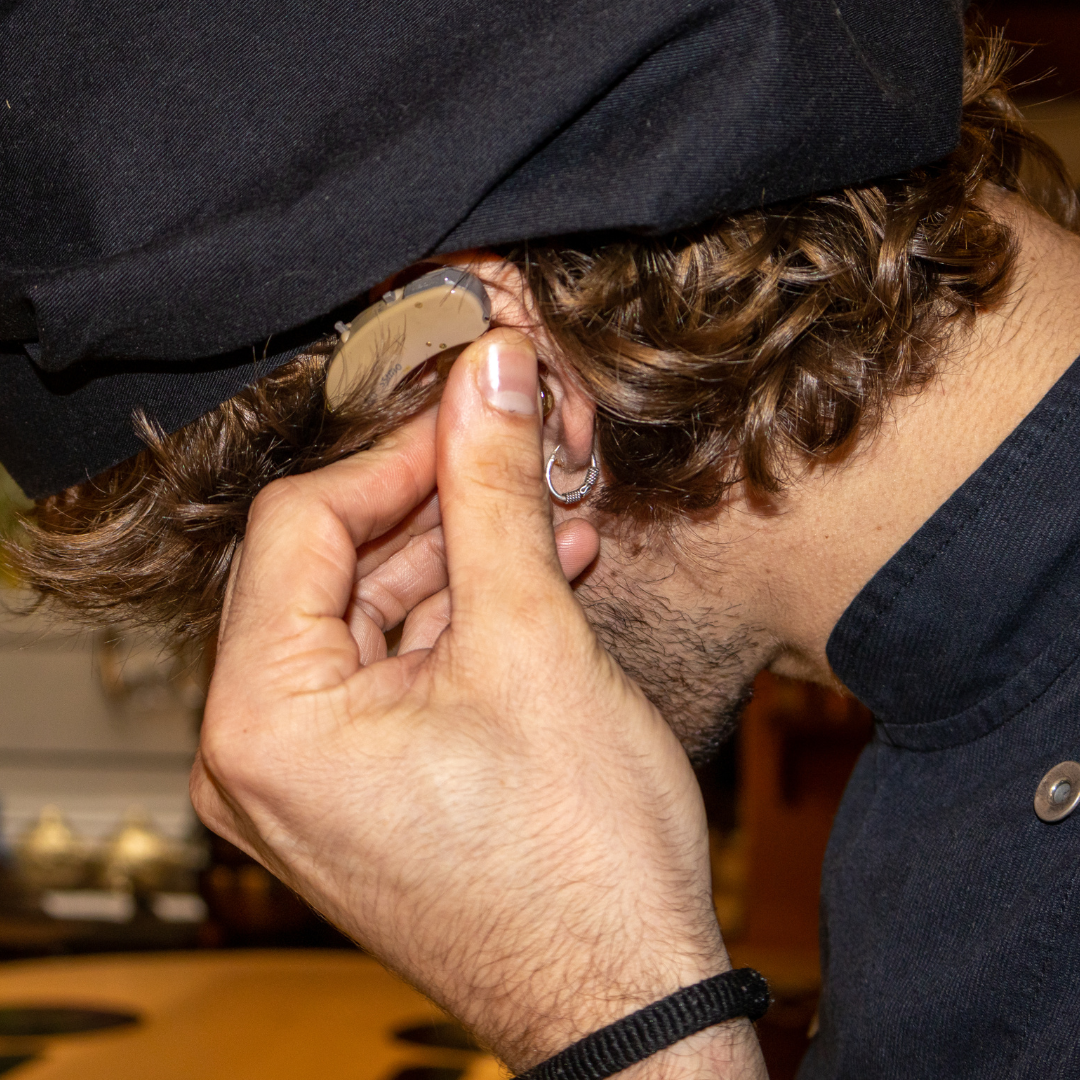
Active restaurant conversations are frequently hard to decipher when surrounding background noise clashes with your hearing. We perform comprehensive diagnostic assessments to evaluate hearing in quiet rooms and challenging acoustic spaces to identify functional deficits. After uncovering the precise factors driving your difficult hearing, our team helps you select individualized auditory solutions.
Why Everyday Hearing Fails in Busy, Noisy Restaurants
A tranquil environment produces a beneficial signal-to-noise ratio where spoken dialogue easily overpowers weak ambient noise. Dining venues establish an entirely contrary auditory challenge. Multiple voices, music, kitchen noise, and reverberation overlap with speech, forcing the ears and brain to work harder to separate the person you want to hear.
Such difficulty frequently signals sensorineural high-frequency hearing loss, auditory processing dysfunction, or noise-induced cochlear damage. Attention, fatigue, dim lighting, and distance from the speaker may make it worse. Numerous individuals show standard hearing thresholds on paper but reveal marked comprehension drops on clinical speech-in-noise testing. Consistent difficulty following restaurant conversation warrants clinical investigation even when everyday hearing seems largely unaffected.
The Audiological Process for High-Frequency Hearing Loss
We initiate evaluation by exploring challenging acoustic environments, acoustic trauma history, subjective tinnitus, prescription drug profiles, and unilateral ear changes.
Diagnostic pure-tone audiometry establishes the softest auditory thresholds you can perceive across standardized frequencies via air and bone conduction pathways. In high-frequency hearing loss, the audiogram reveals a sloping configuration where hearing acuity drops progressively as pitch frequencies increase. Supplementary assessments routinely include diagnostic tympanometry to analyze middle-ear status alongside word-recognition testing to determine speech clarity.
Given that isolated quiet booths do not reflect chaotic restaurant acoustics, specialized speech-in-noise testing delivers invaluable diagnostic data. This procedure gauges speech-discrimination accuracy while competing multi-source noise becomes incrementally louder. In combination, these diagnostic metrics reveal whether communication hurdles involve audibility thresholds, speech discrimination, neural noise management, or mixed conditions.
The Role of Central Auditory Processing Disorders in Adults
An auditory processing disorder affects how the central auditory nervous system interprets sound. The ears may detect tones at expected levels, but the brain may have difficulty organizing competing signals, distinguishing similar speech sounds, or following rapid conversation. We first rule out peripheral sensorineural deficits before deciding whether a dedicated auditory-processing test protocol or specialist referral is indicated.
What Strategies Can Improve Hearing in Noisy Environments?
Simple situational adjustments enhance the speech signal entering your ears and offer clearer facial cues. When planning to dine out, select restaurants with calmer atmospheres or arrange reservations during off-peak hours. Dining locations utilizing sound-absorbing elements like booths, felt panels, window curtains, and carpet offer better acoustics than high-ceilinged rooms with hard surfaces.
At the restaurant:
- Ask host staff for a quiet table distanced from kitchen traffic, bar noise, audio speakers, and loud group tables.
- Choose a seat with your back against a solid wall to block acoustic clutter originating from behind.
- Ensure you sit directly across from speaking partners in an area with sufficient illumination for visual lip-reading.
- Maintain the shortest comfortable physical distance between yourself and your conversation partner.
- Orient your stronger ear toward the key person you want to follow in conversation.
- Encourage speakers to rephrase key information rather than simply repeating unparsed words louder.
- Validate significant pieces of information directly rather than feigning understanding during dialogue.
- Step into a quiet area for a few minutes when listening fatigue begins to compromise focus.
- Invite companions to focus on clear articulation and a measured, comfortable cadence.
- Yelling distorts natural speech formants and rarely makes spoken words easier to decipher.
The Best Hearing Devices for Overcoming Restaurant Noise
Determining the proper hearing technology hinges on the underlying disorder, everyday listening environments, and whether peripheral hearing loss is diagnosed. Professionally programmed hearing aids incorporate multi-channel directional microphones, digital noise reduction algorithms, and custom restaurant settings to capture frontal speech while attenuating background interference. Users should establish realistic expectations because no hearing device can fully eradicate all unwanted ambient speech.
Pairing your devices with a remote wireless microphone generates a substantial improvement in the direct signal-to-noise ratio. Worn on the speaker’s collar or set on the table, the microphone broadcasts direct audio to paired hearing aids or specialized receivers. This targeted setup effectively neutralizes the negative impacts of room distance and interfering background noise.
Other clinically valuable tools include:
- Table microphones for small-group conversations
- Telecoils or hearing-loop systems in equipped venues
- Mobile speech-to-text applications delivering instant visual captions during dinner
- Earbuds or hearables with compatible assistive-listening features
- Sound-meter apps and acoustic dining directories for locating quiet venues
We analyze suitable devices, verify functional compatibility with your current setup, and guide you through real-world operation.
Professional Audiological Solutions for Loud Listening Environments
Clinical hearing evaluations progress the diagnostic process past the typical assertion that hearing is adequate in quiet. Our clinicians review the specific environments, vocal pitches, and decibel levels that trigger breakdowns to design a personalized test protocol. The assessment may include pure-tone thresholds, middle-ear testing, word recognition, and speech-in-noise measures. Central auditory-processing testing is considered whenever clinical intake and initial test outcomes point toward higher-order deficits.
Abrupt auditory reductions, unilateral hearing shifts, or rapid functional deterioration require prompt assessment by an ear, nose, and throat physician. Tailored audiological treatment identifies the exact origin of listening breakdown rather than assuming environmental dining noise is the sole culprit.
Schedule a Hearing Evaluation Today
If noisy restaurant gatherings leave you struggling to follow dialogue, pulling away, or feeling completely drained, schedule an audiological evaluation with our team. Our specialists can introduce effective interventions to support your hearing in noisy environments via precision hearing aid fittings, assistive devices, or audiological rehabilitation.
Contact us to request an appointment and take the next step toward easier conversations.